By visiting our site, you agree to our privacy policy regarding cookies, tracking statistics, etc. Read more
Amino acids for livestock and pets
Amino acids for food
Amino acids for pharmaceuticals
High potency sweetener
Rumen-protected Lysine
Culinary-grade broths and stocks
Umami seasoning
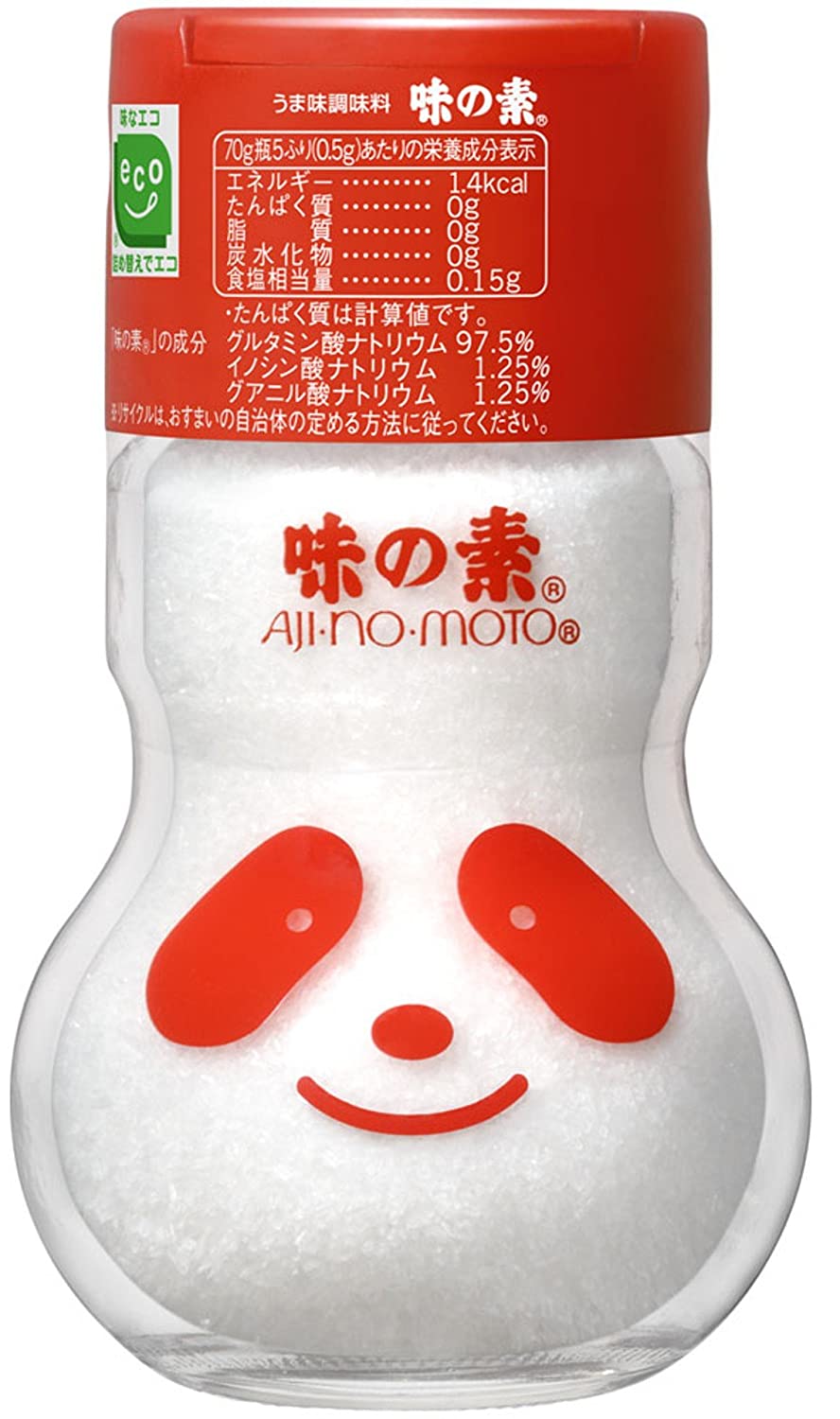
Monosodium Glutamate (MSG) is the purest form of umami and delivers delicious savory taste to a variety of foods. Since its discovery over 110 years ago, MSG has been used safely as a food ingredient and seasoning around the world.
We manufacture our MSG through advanced fermentation technology using quality ingredients such as locally grown corn.
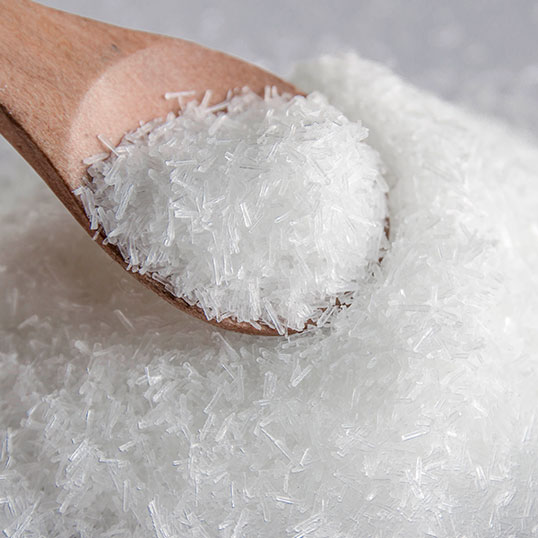
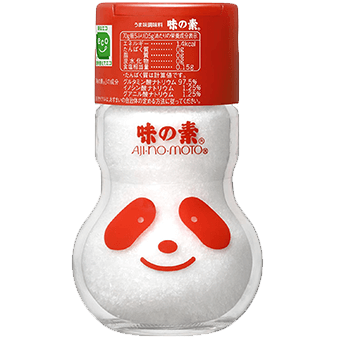
Monosodium glutamate (MSG) is a seasoning that combines sodium (like that in table salt) with glutamate, the most abundant amino acid in nature and one of 20 that makeup protein in the human body. MSG is the purest form of umami, which is a taste that brings out the savory deliciousness of food and adds dimension to the flavors. Glutamate is also naturally present in foods such as tomatoes, aged cheeses, mushrooms, and even breast milk.
Best yet, MSG has two-thirds less sodium than table salt and can enhance the flavor of food while decreasing the need for salt. MSG separates into sodium and glutamate when it’s exposed to water in foods or saliva in the mouth, which is why the body cannot distinguish between the glutamate naturally present in foods (such as Parmesan cheese) and added MSG.

Delicious Sodium Reduction

Enhance flavor with pure umami seasoning

Produced through advanced fermentation technology
Resources, studies, news and much more.
Explore our advanced fermentation process at our Eddyville plant in Iowa

Monosodium glutamate (MSG) is a seasoning that combines sodium (like that in table salt) with glutamate, the most abundant amino acid in nature and one that is commonly found in everyday foods like tomatoes and mushrooms. In simple terms, it is a seasoning that enhances the flavor of foods by adding umami, the savory fifth taste.
MSG is produced by a fermentation process developed by Japanese scientists. Iowa corn is used as the starting ingredient for MSG made in the US. In other countries, ingredients such as sugar beets or sugar cane are used.
The fermentation process consists of four steps: Fermentation of glucose (a type of sugar) into glutamic acid. The glucose comes from Iowa corn. The glutamic acid is then mixed with sodium hydroxide. This results in MSG and water. MSG is purified through a filtering process. Finally, the water is evaporated through a drying process leaving only a pure white powder of MSG.
No. Since its discovery over 100 years ago, MSG has been used safely as a food ingredient and seasoning in many different cultures. Extensive scientific research confirms MSG’s safety and role in the diet. (1, 2, 3, 4 )
In 1968, a letter to the editor was published in the New England Journal of Medicine 5 describing the author’s personal account of symptoms he experienced after eating at a Chinese restaurant, including weakness, palpitations, and numbness. In the letter, he acknowledged such symptoms may have been due to any number of ingredients in the meal including sodium, alcohol from Chinese cooking wine, or MSG. Subsequent studies injected large volumes of MSG directly into the brain and abdomen of laboratory mice, producing ill effects in the animals (much like what is observed with other dietary substances), leading many to question the safety of MSG, despite its use in the food supply for over 50 years.
Whether you’re eating a tomato or foods with MSG added, our bodies process the glutamate in the same exact way. When MSG is exposed to liquid, for example in broth or saliva, the sodium separates from the glutamate molecule. As such, the body digests glutamate and sodium separately.
Some may have sensitivities to the seasoning in the same way people have sensitivities to a wide array of foods, often depending on how much of a food is consumed and in what context. It’s difficult to say how common this is because sensitivities haven’t been consistently demonstrated in placebo-controlled, double-blind trials with the general population or even in those who claim to be sensitive.3 The Australian/New Zealand regulatory agency has previously stated that the percent of the population with a sensitivity “is not really known but is suggested to be between 1 and 2% of the general population.”4
I heard someone say MSG gives them a headache. While over the years people have blamed headaches and other symptoms on foods containing MSG, the FDA has never been able to confirm MSG as the cause. In fact, such reports spurred the FDA to work with the Federation of American Societies for Experimental Biology (FASEB) to examine MSG’s safety in the 1990s, and they concluded MSG is safe.3 Also, the International Headache Society removed MSG from its list of causative factors for headaches in January of 2018 due to lack of evidence.6
Good question. Behavioral scientists speculate that our relationships with food aren’t just driven by physiological mechanisms, but also by psychological influences. Our associations, habits, cultural and social norms, fears and cognitive biases all play a role. For example, people can be quick to infer causation when they notice an apparent correlation, or they perceive it as normal to have food sensitivities, so they look for confirmation of sensitivities and ignore disconfirming evidence.
“Clean-label” has certainly become a common term being used across the food industry, but it lacks a consistent definition and is not grounded in science. Consumers often associate “clean” with ingredients that are easy to pronounce, but in reality all ingredients are chemically composed. Some ingredients have a familiar sounding name while others do not and are simply referred to as their chemical structure. For instance, sodium chloride is referred to as “salt” and potassium chloride can be called “potassium salt.” MSG can also be called “umami seasoning” which helps people better understand the ingredient. However, in the US, the only terms used for labeling purposes are MSG or monosodium glutamate.
Yes! Even though MSG has ‘sodium’ in its name, it actually has 2/3 less sodium than table salt, and when used in the place of some salt, it can significantly lower the sodium content of a product (in some cases up to 50% in packaged foods and snacks) without compromising taste. The seasoning has even been recognized by the National Academies of Sciences, Engineering and Medicine7 as a tool to reduce sodium in the food supply. This is especially relevant given that 9 in 10 Americans consume too much sodium, according to the 2020-2025 Dietary Guidelines for Americans.8
It is no surprise plant-based alternatives and a preference for better-for-you foods are here to stay. According to recent research9, consumers choose meat alternatives primarily for reasons related to health and the environment but often find the taste and texture aren’t meeting expectations. Additionally, 70% of plant-based meat alternative consumers are open to having more ingredients in their meat alternatives if it means improved taste and reduced prices compared to “real” meat. This is where MSG comes in as a cost-effective way to add savory umami taste to plant-based and better-for-you foods, as shown in recent research.10 Using MSG is also a great way to reduce sodium levels in a dish without having to compromise on taste. Research indicates that high amounts of sodium are the #1 issue consumers have encountered with plant-based meat alternatives. Roughly 1 in 3 consumers, regardless of how often they eat plant-based meat alternatives, report high sodium as a problem with plant-based meat alternatives.9
1 Joint FAO/WHO Expert Committee on Food Additives. Evaluation of certain food additives and contaminants: L-glutamic acid and its ammonium, calcium, monosodium and potassium salts. Geneva: Cambridge University Press; 1988.
2 Reports of the Scientific Committee for Food, 25th Series: First series of food additives of various technological functions. Brussels, Belgium: Commission of the European Communities; 1991.
3 Federation of American Societies of Experimental Biology. Executive summary from the report: analysis of adverse reactions to monosodium glutamate (MSG). J Nutr. 1995 Nov;125(11):2891S-2906S.
4 Food Standards Australia New Zealand. Monosodium Glutamate: A Safety Assessment. Canberra, Australia; 2003.
5 Kwok RH. Chinese-restaurant syndrome [letter]. N Engl J Med. 1968 Apr 4;278(14):796.
6 International Headache Society, Headache Classification Committee. The International Classification of Headache Disorders, 3rd edition. Cephalalgia. 2018 Jan;38(1):1-211.
7 National Academies of Sciences, Engineering, and Medicine. Dietary Reference Intakes for Sodium and Potassium: Knowledge Gaps and Future Directions. Washington, DC: The National Academies Press; 2019.
8 U.S. Department of Agriculture and U.S. Department of Health and Human Services. Dietary Guidelines for Americans, 2020-2025. 9th Edition. December 2020. Available at DietaryGuidelines.gov.
9 2021 Consumer Research Survey among n=7,002 U.S. general consumers (adults ages 18+ nationwide) fielded online January 21 – February 29, 2021 by Edelman Data & Intelligence.
10 Halim J, Bouzari A, Felder D, Guinard JX. The Salt Flip: Sensory mitigation of salt (and sodium) reduction with monosodium glutamate (MSG) in “Better-for-You” foods. J Food Sci. 2020;85(9):2902-2914.
Amino acids for livestock and pets
Amino acids for food
Amino acids for pharmaceuticals
High potency sweetener
Rumen-protected Lysine
Culinary-grade broths and stocks
Umami seasoning